

The Next Factor: High-RG Asymmetric Pearl for the Skid-Flip Era
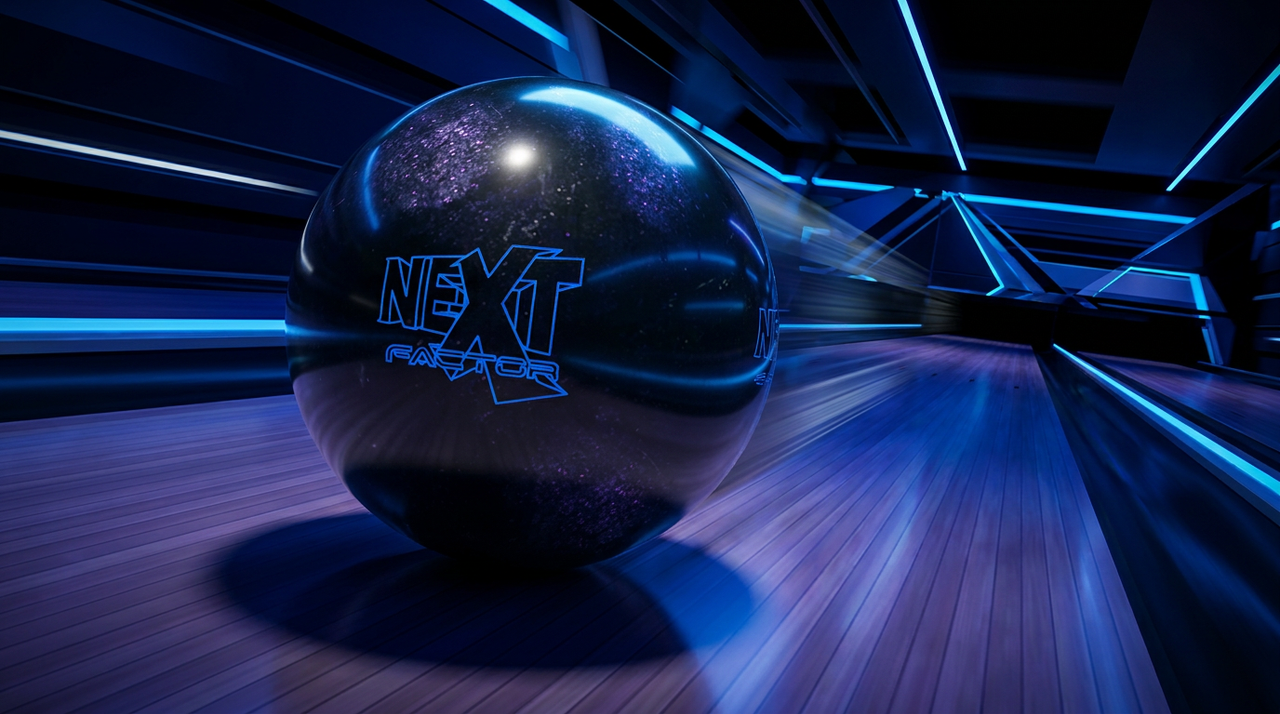
You're three games into league night on a house shot that's starting to show wear, and your earlier pearls are hooking too much while your solids aren't reading the breakpoint. You need something that travels clean and long down the lane, then makes a sharp, predictable move when it finds friction—without requiring you to completely remap your angles.
Performance summary:
The Next Factor pairs a 256 RG / 051 differential RAD TQ asymmetric core with an R3S Pearl coverstock—a combination reviewers consistently describe as exceptionally clean and long-skidding compared to Storm's symmetrical pearl options. The ball reads the lane late, rolls through the front with minimal early hook, then produces a sharp, angular backend reaction that reviewers compare variously to a weaker Vivid/Virtual Energy Blackout or a beefed-up High Road. However, reviewers diverge meaningfully on where this ball truly excels: some note it performs best on house shots and burned lane conditions rather than fresh patterns, while others found it too aggressive or angular on fresh oil and recommend surface adjustment (2000–3000 grit) or drilling stronger layouts to tame it. Most agree the high RG requires moderate-to-higher rev rates and lower-to-medium speeds to activate the backend; higher-speed or lower-rev bowlers may find it skids past the breakpoint without sufficient friction.
Who should buy this:
- Medium-to-higher rev rate bowlers seeking a long, clean asymmetric pearl for house shots and burned lane conditions
- Two-handed bowlers and bowlers who play deeper on the lane and prefer to control roll speed
- League bowlers who want a late-reading pearl with strong backend motion when the lanes transition or wear down
- Bowlers looking for a high-RG asymmetric option in Storm's lineup without needing a hybrid or stronger cover
Who should skip this:
- Higher-speed bowlers or lower-rev-rate bowlers who bowl on fresh oil—the high RG may skid past the breakpoint without friction
- Bowlers who need an immediate-read, early-hook ball out of the box; this requires patience and proper lane conditions
- Those uncomfortable with light coverstock maintenance; reviewers suggest 2000–3000 grit pads may be needed for earlier traction on some conditions
Pros:
- Exceptionally clean, long-skidding motion down the lane—significantly cleaner than Storm's symmetrical pearls
- Sharp, predictable angular backend reaction when conditions support it; excellent for worn or medium-oil patterns
- High RG (256) and significant differential (051) deliver substantial flare and length without requiring a hybrid or stronger cover
- Asymmetric core offers more drilling versatility than symmetrical options; fits well between the High Road and Phase 2 Pearl in a bag
Cons:
- Too angular or uncontrollable on fresh oil without surface preparation or stronger layouts; not recommended as a fresh-pattern starter
- Requires moderate-to-higher rev rates and lower-to-medium speeds to perform as advertised; high-speed or lower-rev bowlers may struggle
- Some reviewers found it situational; opinions split on whether it truly differs meaningfully from existing Storm asymmetric pearls
- R3S Pearl coverstock is older technology; not as strong as newer Storm covers like TX or some competitor options
Buying tips:
Reviewers report this ball responds well to drilling adjustments—stronger layouts (60×5 by 30 or even 60×4 by 40) help control the aggressive RG, particularly for higher-speed players. Several reviewers recommended lightly sanding the coverstock with 2000–3000 grit pads if you need earlier traction on medium oil; the factory Power Edge finish is quite polished. If you bowl on a house shot, this ball is plug-and-play out of the box; on fresh or drier patterns, expect to either adjust surface or sit it out until the lanes transition.
Verdict:
The Next Factor is a genuine high-RG asymmetric pearl carved out for a specific niche: bowlers with moderate-to-high rev rates who want exceptional length and late-reading motion on house shots and burned lane conditions. It's not a universal fresh-pattern ball, and it won't replace a solid or hybrid in your bag. But if you've been chasing a cleaner, longer-skidding asymmetric pearl and you bowl within its speed and rev range, it delivers exactly what Storm's marketing promises—a revival of the X-Factor legacy with modern coverstock tech.
How does the Next Factor compare to the Phase 2 Pearl or High Road 40?
Multiple reviewers position it as similar in strength to the Phase 2 Pearl but with more drilling versatility (owing to its asymmetric core). Compared to the High Road 40, the Next Factor is stronger—described as 'High Road on steroids'—with a sharper, more angular backend and more length, making it better for medium-to-dry conditions where you need both distance and drive through the pins.
Is this ball good for fresh house shots, or should I wait for the lanes to transition?
Reviewers consistently recommend it for burned lane conditions and medium-to-dry patterns rather than fresh oil. On fresh house shots, it tends to be too angular or skip past the breakpoint without additional surface prep. Several reviewers suggested either roughing up the coverstock with 2000–3000 grit pads or using it after 12–15 games when the lane has worn down.
Does the 256 RG really make a difference compared to lower-RG asymmetric pearls?
Yes—the 256 RG is described as notably high for an asymmetric pearl and delivers exceptional length and skid compared to earlier-reading options like the RST Hyperdrive Pearl. However, this also means the ball requires moderate-to-higher rev rates and lower-to-medium speeds to activate the backend; higher-speed or lower-rev bowlers report it may skid too long or feel uncontrollable.
Will I need to adjust the coverstock or layout when I buy it?
Out of the box with the factory Power Edge finish, the ball is playable on house shots and medium-to-worn oil. However, several reviewers found stronger layouts (like 60×4 by 40) helpful for controlling the RG, particularly for higher-speed bowlers. Some also recommended lightly sanding with 2000–3000 grit pads if you need earlier traction on oiled lanes.
How does this compare to the original X-Factor from 2002?
The original X-Factor was a medium-RG, mild asymmetric (253 RG, 058 differential). The Next Factor is higher RG (256), higher differential (051), and pairs it with a modern R3S Pearl cover—making it longer-skidding and sharper on the backend. Reviewers see this as an updated, stronger interpretation of the legacy rather than a direct reimagining.
Is the Next Factor good for two-handed bowlers?
Multiple reviewers specifically recommended it for two-handed bowlers and those who play deeper on the lane and control roll speed. The clean, long-skidding motion suits bowlers who want to slow down the ball and let the backend reaction unfold rather than force early hook.
Explore Popular Articles
-

The Pearl That Reads Cleaner: Danger Zone Purple Ice for Bowlers Who Want Length Without Overthinking
Sep 5th 2026You're standing in the approach on game three, the lane is opening up, and you need a ball that gets
-

900 Global Vengeance: The Heavy Oil Benchmark That Actually Backs Up the Hype
Sep 5th 2026You're standing on fresh oil in league, and your usual heavy hitter feels too aggressive, reading to
-

The Next Factor: High-RG Asymmetric Pearl for the Skid-Flip Era
Sep 5th 2026You're three games into league night on a house shot that's starting to show wear, and your earlier