

Forge Fuel: The Heavy Oil Workhorse That Refuses to Quit Early
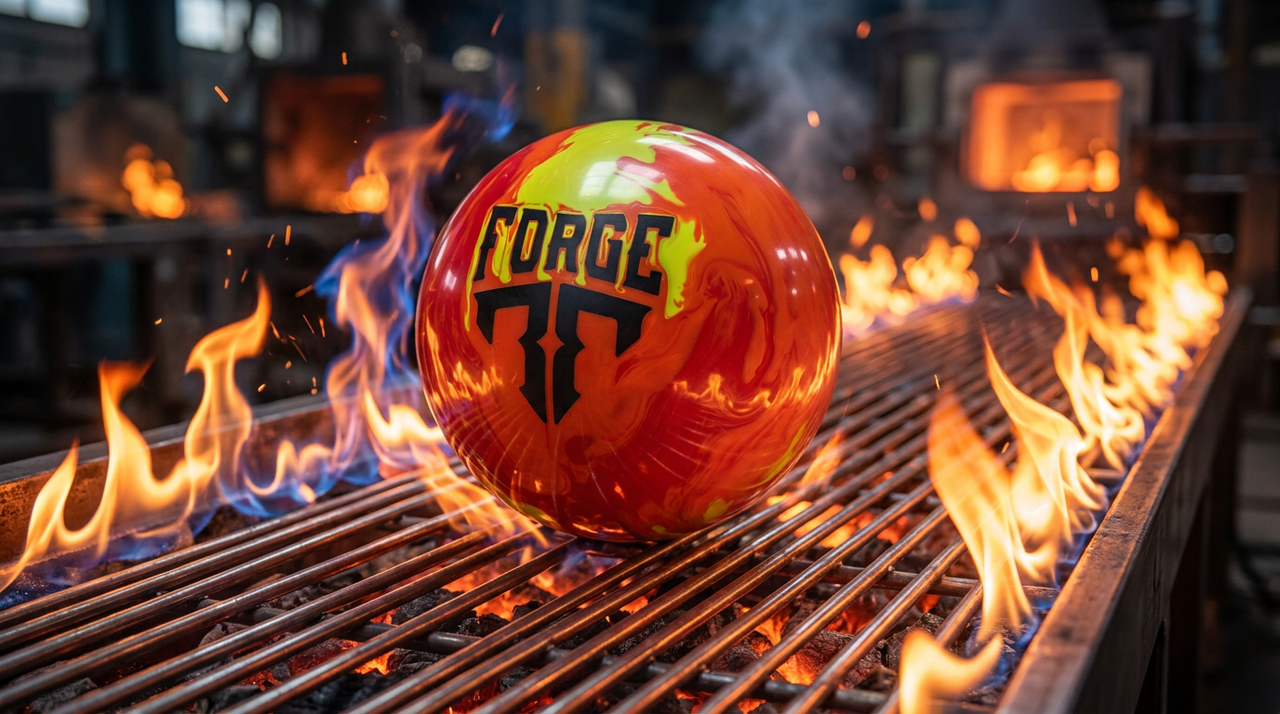
You've got fresh oil in front of you and a Subzero Forge that reads the lane like a urethane ball—smooth, controlled, but dead by the time it hits the pins. The Forge Fuel changes that equation. It still grips heavy oil aggressively from the moment it leaves your hand, but it keeps moving through the pocket instead of fading out.
Performance summary:
The Forge Fuel is a very strong symmetrical solid that comes out of the box at 1000 grit with the new Leverage MXT coverstock, engineered to create more traction than the MXC used on the Subzero Forge. Reviewers consistently describe it as early-reading and aggressive on fresh oil, requiring bowlers to move significantly left to find the pocket, and praise its unexpected continuation and hook shape compared to earlier Forge solids. The ball shows less angularity than some competitors—it's chuggy and rolly rather than sharp—but delivers more backend motion than the Subzero and better recovery shape, allowing bowlers to play steeper angles. One reviewer noted it sits between the Subzero Forge and Raptor Rain in character: slower and earlier than the Raptor, but more continuous than the Subzero. As oil gets into the coverstock and lane shine develops, performance is expected to improve further.
Who should buy this:
- Speed-dominant bowlers with lower rev rates who need heavy control on fresh, high-volume patterns
- Tournament bowlers on sport shots and fresh house conditions who want a single ball covering multiple oil volumes
- Bowlers throwing the Subzero Forge who want more continuation and fewer flat pins without sacrificing control
- High-speed, high-rev players who need an aggressive front-end reaction that still makes the pocket
Who should skip this:
- League bowlers expecting to throw house shots without significant surface adjustments (1000 grit is too aggressive)
- Bowlers who prefer clean, angular reactions over early, rolly hook shapes
- Those looking for a versatile ball that works across multiple oil volumes without resurfacing
Pros:
- Exceptional early-lane traction and oil-eating aggression that requires minimal revs to read the lane
- Continuous motion and hook recovery that exceeds the Subzero Forge, reducing flat pin leaves
- New Leverage MXT coverstock with Duramax technology resists lane shine and extends cover life
- Allows bowlers to play steeper angles than traditional Forge solids, creating more scoring options
- Comes in 12–16 lb weights for a wide range of bowlers
Cons:
- 1000 grit finish is too aggressive for typical house league play without resurfacing to 2000+ grit
- Very strong symmetrical core makes it unsuitable for house shots or heavily transitioned lanes without major adjustments
- Early read and minimal angularity mean it won't handle deep-line playing styles well
- Requires high-volume oil conditions to be usable; not a versatile ball for varied lane conditions
Buying tips:
This ball is designed for fresh oil and will require surface adjustments if you plan to throw it in league play—most reviewers recommend moving to 2000 grit or higher for house shots. The Duramax additive means the coverstock resists lane shine more than traditional reactive covers, so it may take longer to break in, but reviewers predict it will improve as oil penetrates the surface. Drilling layout matters on this strong symmetrical core; layout choices will affect how early or continuous the reaction feels.
Verdict:
The Forge Fuel is a legitimate step forward for Motiv's heavy-oil lineup, solving a real problem: most strong solids force you to choose between early control and pin carry. This one delivers both, making it the go-to fresh-oil ball for speed-dominant and tournament bowlers willing to do surface work. It's not a house-shot ball, and it's not for bowlers who want clean, angular motion—but if you're hunting strikes on volume, this is a game-changer.
How does the Forge Fuel compare to the Subzero Forge?
The Forge Fuel comes out of the box at 1000 grit versus the Subzero's 2000 grit, making it significantly more aggressive and earlier-reacting. The new Leverage MXT coverstock creates more traction than the MXC on the Subzero. Most importantly, reviewers report the Forge Fuel produces more hook and continuation through the pins, whereas the Subzero can be slow and blocked. You can also play steeper angles with the Fuel without it dying like the Subzero would.
Is this ball better for high-rev or low-rev bowlers?
Reviewers identified it as ideal for speed-dominant bowlers with lower rev rates, though high-rev, high-speed bowlers will also find plenty of hook potential. One reviewer specifically recommended it for bowlers who struggle with rev rate but throw with good speed, as the aggressive coverstock will create early traction and control without needing high rotation.
What surface finish should I use for league play?
The 1000 grit factory finish is too aggressive for typical house league play. Reviewers recommend resurfacing to 2000 grit or higher if you plan to throw it on league conditions. It's specifically engineered for fresh tournament patterns at 1000 grit.
How does the new MXT coverstock differ from the MXC used on the Subzero?
MXT stands for maximum traction, while MXC stands for maximum control. The MXT is engineered to create more response and traction than the MXC, resulting in a sharper, more continuous reaction. This translates to better pin carry and less likelihood of leaving flat pins compared to the Subzero.
Will this ball improve as it gets used?
Yes. Reviewers noted that at 1000 grit out of the box, the surface is extremely chalky and aggressive. As you throw it, oil will penetrate the coverstock and lane shine will develop, which is expected to improve performance. One reviewer compared the trajectory to the Jackal Ghost B2, which came out very aggressive but improved with use.
Is the Forge Fuel good for house shots?
No. Multiple reviewers emphasized this is a fresh-oil, high-volume ball. The combination of the 1000 grit surface and aggressive MXT coverstock makes it unsuitable for house shots without major surface adjustments. One reviewer called it potentially too strong for general league play even after resurfacing.
Explore Popular Articles
-

The Pearl That Reads Cleaner: Danger Zone Purple Ice for Bowlers Who Want Length Without Overthinking
Sep 5th 2026You're standing in the approach on game three, the lane is opening up, and you need a ball that gets
-

900 Global Vengeance: The Heavy Oil Benchmark That Actually Backs Up the Hype
Sep 5th 2026You're standing on fresh oil in league, and your usual heavy hitter feels too aggressive, reading to
-

The Next Factor: High-RG Asymmetric Pearl for the Skid-Flip Era
Sep 5th 2026You're three games into league night on a house shot that's starting to show wear, and your earlier